Why “lead time” is rarely a single number
When you ask a manufacturing partner “how long will this take?”, the answer is usually a confident number: “3 weeks”, “6 weeks”, “8 weeks”. That number is built from 8 separate components, any of which can blow up the schedule by days or weeks. The shops that hit the date on time are the ones who plan against all 8 — not just the obvious “machining time” piece.
This guide walks through every factor that drives lead time, in the order it actually consumes calendar days on a real project.
1. Raw material availability
The most overlooked variable. If your part is in 6061-T6 standard plate or 304 stainless, material is in stock at most shops — zero lead time impact. If your part is in 7075-T6 thick plate, Inconel 718, Hastelloy or PEEK rod, expect 1-3 weeks just for material to arrive.
Typical material lead times:
| Material | Typical lead time |
|---|---|
| 6061-T6, 304 SS, mild steel sheet | In stock |
| 7075-T6 plate, 316L bar | 3-7 days |
| Titanium Grade 5, Inconel 718 | 2-4 weeks |
| Specialty alloys (Hastelloy, exotic Ni) | 4-8 weeks |
| Engineering plastics (PA-CF, PEEK) | 2-3 weeks |
| Pre-cut anodized aluminum (specific colors) | 2-3 weeks |
Shorten it: Ask your shop “what materials do you stock?” and design with stock alloys when possible. Switching from 7075 to 6061 saves 1-2 weeks for parts where the strength difference doesn’t matter (see 6061 vs 7075).
2. Equipment scheduling and capacity
Every shop has a finite number of CNC machines, presses, mold cavities and finishing stations. When you submit a job, it joins the queue. A “5-day machining cycle” can become 12 calendar days if the machine is booked for 7 days first.

What drives the queue:
- Shop’s typical capacity utilization (most run at 70-85% — anything above 90% means delays)
- Shift count (1-shift vs 2-shift vs 24/7 — directly affects throughput)
- Process specialty match (a job that needs a 5-axis machine waits for that specific machine, even if 3-axis machines are idle)
Shorten it: Ask the shop “what’s your current backlog on this process?” Reputable shops give honest numbers. Plan around peak periods — Q4 (toy / holiday product launches) and pre-Chinese New Year typically have 2-3× normal queues.
3. Number of processes per part
Single-process parts (CNC only, or sheet metal only) are fastest. Multi-process parts compound delays:
| Part complexity | Processes involved | Typical added time |
|---|---|---|
| Simple CNC bracket | 1 (CNC only) | Baseline |
| Painted aluminum housing | 2 (CNC + paint) | +3-5 days |
| Welded sheet metal assembly | 3 (laser + bend + weld) | +5-8 days |
| Anodized + laser-marked CNC | 3 (CNC + anodize + mark) | +5-7 days |
| Insert-molded part | 3 (mold prep + insert prep + molding) | +5-10 days |
| Multi-shot painted enclosure | 4+ (machine + paint + assemble + finish) | +10-14 days |
Each process transfer between vendors adds 2-3 days for shipping, handling and inspection at the next shop. Vertically-integrated shops that handle multiple processes under one roof shave 30-50% off this stage.
Shorten it: Use a vendor that does as much in-house as possible. Browse our process capabilities page — every process listed is in-house, no inter-shop handoffs.
4. Surface finishing turnaround
Surface finishing is its own universe of lead-time variation. Some finishes are 2-day, some are 2-week:
| Finish | Typical lead time |
|---|---|
| Bead-blast | 1-2 days |
| Standard anodize (clear, black, gray) | 3-5 days |
| Custom-color anodize (specific Pantone) | 7-10 days |
| Hard anodize (Type III) | 5-7 days |
| Powder coat | 3-5 days |
| Paint (custom color matched) | 7-14 days |
| Electroplating (zinc, nickel) | 5-7 days |
| Decorative chrome | 7-14 days |
| PVD coating | 2-3 weeks |
| Silk-screen + multi-color graphics | 5-10 days |
Shorten it: Stick to standard finishes (clear or black anodize, standard powder coat colors). If color matching is critical, send the Pantone code with the RFQ — getting it right first time saves 1 week vs a rejected color sample.
5. Quality control and inspection
QC time scales with both quantity and inspection level:
- Standard 1st-piece + AQL sampling (typical for industrial parts): 2-4 hours per batch
- 100% inspection (high-spec, aerospace): 30-90 seconds per piece
- PPAP / FAI report (automotive, medical): 1-3 days for the report alone
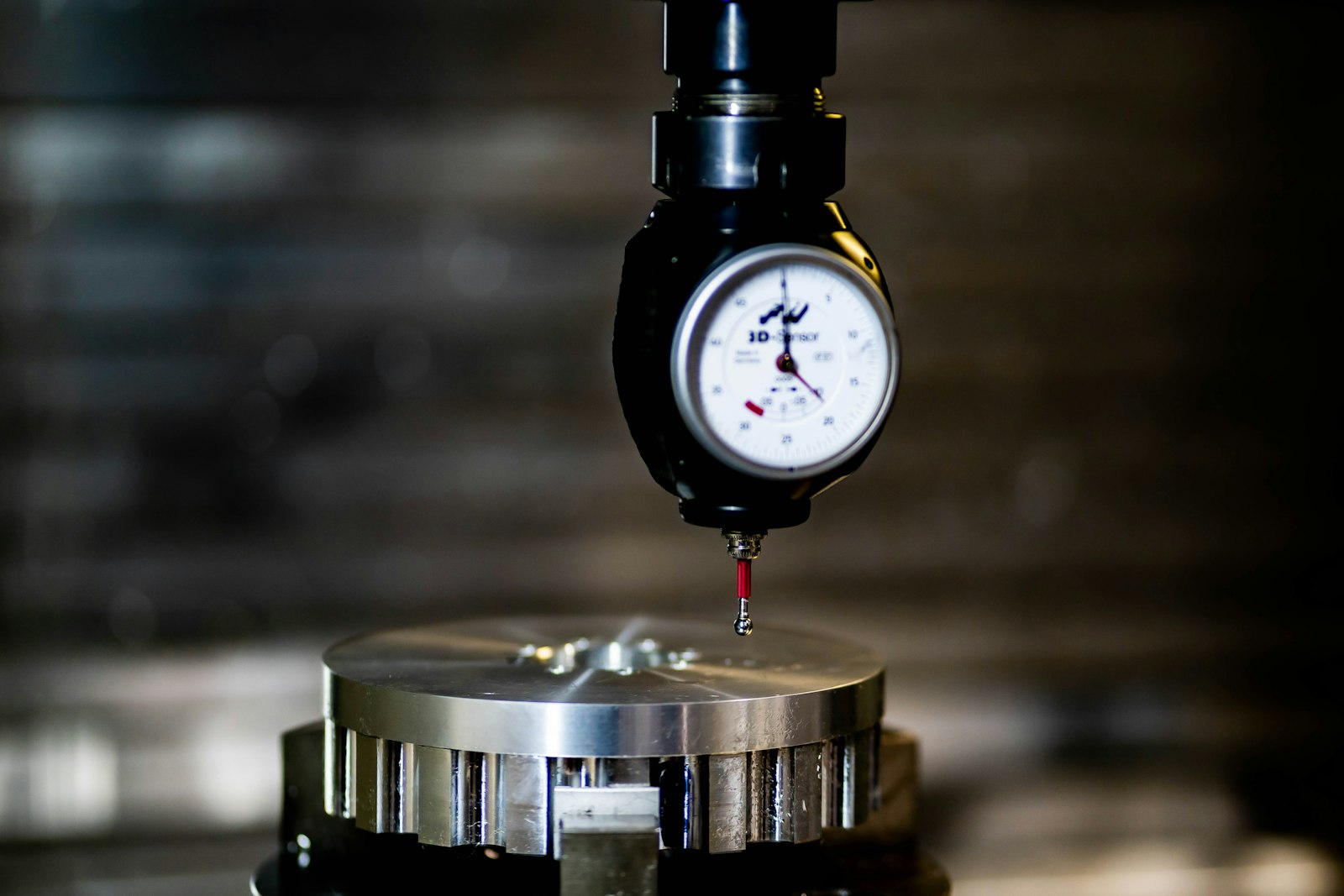
- CMM dimensional report: 1-2 days, includes detailed measurement of every toleranced feature
- Material certs / heat-lot traceability: usually included, but if missing requires ordering through specific channels (1-2 weeks)
A 100-piece run with 100% CMM inspection adds 1-2 calendar days vs a 100-piece run with sampling. If your spec demands it, plan for it. If not, AQL sampling is perfectly safe for most engineering parts.
6. Tooling development (mold, fixtures, jigs)
Only relevant for production processes that need tooling — injection molding, die casting, deep-draw stamping. Tooling time is usually the largest single chunk of project lead time:
| Process | Tooling lead time |
|---|---|
| Injection molding (soft tool, P20) | 4-6 weeks |
| Injection molding (hard tool, S136) | 8-12 weeks |
| Aluminum die casting mold | 6-10 weeks |
| Stamping die (progressive) | 8-14 weeks |
| Vacuum casting silicone mold | 5-7 days |
| CNC custom soft jaw fixture | 1-2 days |
If you’re doing a low-volume bridge production while the production tool is being made, expect a 6-12 week gap between “first order placed” and “first production part shipped”. Vacuum casting is the standard fill-the-gap solution.
7. Shipping and logistics
This is the variable most engineering teams forget. China-to-US shipping by sea is 30-40 days transit plus 3-7 days customs. Air freight is 5-7 days transit plus 1-3 days customs but costs 5-10× more.

Typical international shipping:
| Method | Transit time | Cost (vs sea baseline) |
|---|---|---|
| Sea (LCL — less than container) | 30-40 days | 1.0× |
| Sea (FCL — full container) | 25-35 days | 0.7× per kg |
| Air freight (standard) | 5-7 days | 5-7× |
| Express courier (DHL/FedEx) | 3-5 days | 8-12× |
| Domestic (within China or within US) | 1-3 days | varies |
Shorten it: For prototypes (under 30 kg), express courier is usually worth it — 3-5 day transit to your hands. For production runs, plan sea freight 6 weeks ahead. Hybrid strategy: ship the first 10% by air to start production validation, the rest by sea to optimize cost.
8. Public holidays and downtime
The least technical factor that ruins more schedules than any other: factories shut down for holidays.
In China, the major shutdowns:
- Chinese New Year: 7-15 days of full shutdown, plus 1-2 weeks of reduced output before and after
- National Day (Oct 1-7): 7 days
- Labor Day (May 1-3): 3 days
- Mid-Autumn Festival (varies): 3 days
In the US/Europe:
- Christmas / New Year: 5-10 days of partial shutdown
- July 4th, Thanksgiving: 1-2 days each
- August holidays in Europe (especially Italy/France): full month of reduced output
A project quoted “8 weeks lead time” submitted in mid-January from a Chinese factory is probably actually 10-12 weeks because Chinese New Year falls in the middle.
Shorten it: Check the holiday calendar of your manufacturer’s country before the project starts. Submit critical projects 2-3 weeks before known shutdowns to keep them on the production schedule.
How to actually shorten lead time
Five strategies that compound:
- Use stock materials — saves 1-3 weeks on rare alloys
- Pick a vertically-integrated shop — saves 30-50% of process-transfer time
- Specify standard finishes — saves 5-10 days vs custom color matching
- Allow AQL sampling instead of 100% inspection — saves 1-2 days for production batches
- Use express courier on first prototypes, sea freight on production — best of both
- Plan around holidays — submit critical work 2-3 weeks before known shutdowns
- Pay for rush production scheduling — 30-50% premium gets you to the front of the queue, can save 1-2 weeks
A typical mid-complexity custom part done well — 6061-T6 brackets with anodized finish, 200 pieces — should ship 10-14 calendar days from order to received-at-your-dock. Anything significantly longer means one of the 8 factors is throttling you. Ask the shop which one.
FAQ
Is “lead time” the same as “production time”?
No — lead time includes all 8 factors above (material, scheduling, processing, finishing, QC, tooling, shipping, holidays). Production time is only the active machining/molding/finishing portion. A “5-day production time” can become a 25-day lead time after material wait + queue + finishing + QC + shipping.
How do I know if a quoted lead time is realistic?
Ask the shop for a process-by-process breakdown. A reputable shop can tell you “2 days material, 3 days CNC, 1 day inspection, 2 days anodize, 1 day final QC, 1 day pack-and-ship” — totaling 10 days. If they only quote “6 weeks” without breakdown, the schedule is likely padded by ~50%.
Are quoted lead times negotiable?
Yes — usually 20-30% reduction is achievable by paying a rush surcharge (30-50% premium) and giving the shop priority in their queue. Below that, the schedule is hard-bounded by physics: material has to arrive, machines have to run, paint has to cure.
What’s the absolute fastest I can get a custom CNC part?
For a simple CNC part in 6061-T6 with no special finish, 3-5 calendar days from order to express courier shipping. Some shops offer “next-day” service on stock geometry but this is rare and 3-5× standard cost. For complex multi-process parts, 7-10 days is the realistic floor.
Why does sheet metal often quote longer lead times than CNC for similar complexity?
Counter-intuitive but real — sheet metal has more stages (laser + bend + finish + assembly) and each stage handoff adds time. CNC is often single-process. For a same-complexity part, CNC quotes 1-2 weeks, sheet metal quotes 2-3 weeks. For ultra-fast turnaround on simple housings, CNC wins on lead time even if sheet metal wins on cost. See sheet metal vs CNC enclosure for the full tradeoff.
Get a quote in 24 hours
Send your STEP / DWG file — engineer-direct reply with DFM included.

Leave a Reply