
Many startup teams and engineers get stuck on one question when moving from prototype to mass production: should the first mold be a steel mold? Mold quotes range from ¥30,000 to ¥300,000, but the per-part cost and flexibility for later modifications also differ by an order of magnitude. This article breaks down the decision with real data.
Bottom line: For batch sizes ≤ 5,000 units, use soft tooling; for 5,000 – 50,000 units, decide based on part complexity; for 50,000+ units, steel tooling is almost mandatory. If your product is still iterating, don’t rush into steel tooling—validate with soft tooling or vacuum casting for 1-2 rounds first.
Table of Contents
- What Are Soft Tooling and Hard Tooling?
- 8-Dimension Comparison Table
- Pros and Cons
- How to Choose: Decision Formula
- 3 Real Customer Cases
- 5 Common Mistakes
- FAQ
What Are Soft Tooling and Hard Tooling?
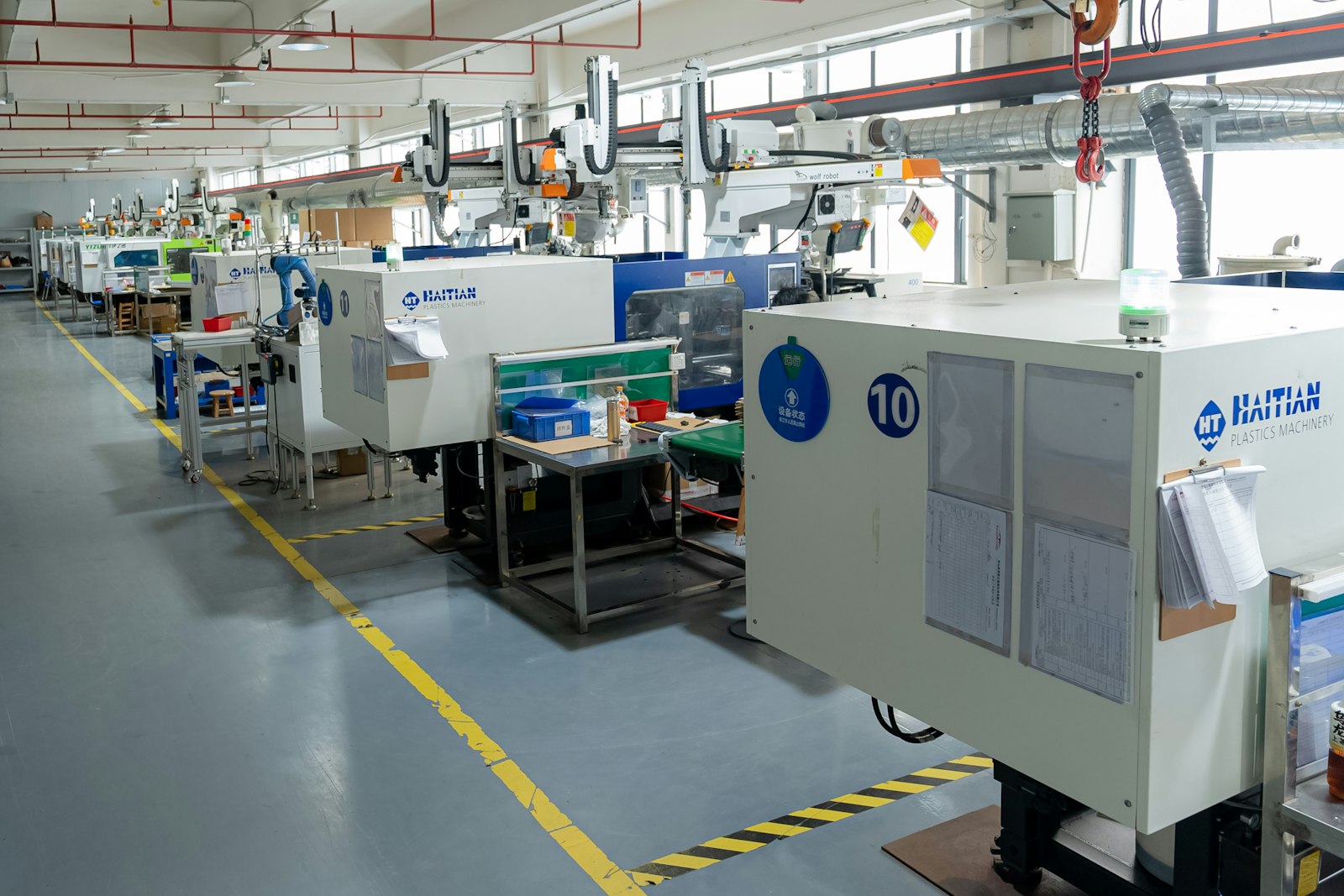
“Soft” and “hard” refer to the hardness of the steel used to make the mold—hardness directly determines how many injection cycles the mold can withstand. The injection process, equipment, and materials are the same; the only difference is the mold itself.
Soft Tooling (Prototype / Bridge Tooling)
Main materials are P20 pre-hardened steel (HRC 28-32) or 7075 aluminum alloy. Mold lead time is 7-15 days, cost ¥3,000 – ¥50,000. Used for low-volume production or final validation before mass production (“bridge tooling”). Lifespan is approximately 5,000 – 30,000 cycles, with aluminum on the lower end and P20 on the higher end.
Hard Tooling (Production Tooling)
Main materials are H13, S136, NAK80 (HRC 48-58). Mold lead time is 25-45 days, cost ¥30,000 – ¥300,000+, and complex multi-cavity molds can exceed ¥1,000,000. Lifespan is 500,000 – 1,000,000+ cycles. Designed for mass production, serving as the “money printer” for daily manufacturing.
8-Dimension Comparison Table
What differences arise when the same part is made with two types of molds? Take an ABS injection-molded part approximately 80×60×30mm (typical consumer electronics enclosure size) as an example:

| Dimension | Soft Tooling (P20 / Aluminum) | Hard Tooling (H13 / S136) |
|---|---|---|
| Initial Investment | ¥8,000 – ¥40,000 | ¥80,000 – ¥250,000 |
| Mold Lead Time | 7 – 15 days | 25 – 45 days |
| Lifespan (Cycles) | 5,000 – 30,000 | 500,000 – 1,000,000+ |
| Injection Unit Price (5,000 pcs) | ¥1.8 – ¥3.0 / pc | ¥1.2 – ¥1.8 / pc |
| Surface Texture Options | Polishing, light texture | Polishing, mirror finish, complex texture |
| Modification Cost | Low (milling repair ¥500 – 3,000) | Medium-High (repair may require new inserts) |
| Multi-Cavity | Primarily 1 – 2 cavities | 4, 8, 16, 32 cavities common |
| Typical Use | Validation / Pilot run / Low volume | Mass production |
Pay special attention to the “Injection Unit Price” row—hard tooling can use multi-cavity to spread per-part cost (8 parts per cycle with the same cycle time), while soft tooling typically has 1 cavity. This is the key variable in the cost breakeven point between soft and hard tooling.
Pros and Cons
Advantages of Soft Tooling
- Low investment: Mold cost is only 1/5 to 1/10 of hard tooling, minimizing risk for the first trial production
- Fast turnaround: From design freeze to receiving 100 trial parts, average completion within 3 weeks
- Modification-friendly: DFM issues can be fixed directly on the cavity; a single cut on aluminum mold takes only 1-2 days
- Better cash flow: Defers the hard tooling investment until after product validation
Disadvantages of Soft Tooling
- Higher per-part cost (limited multi-cavity)
- Short mold life; after 30,000 cycles, flash and deformation occur, requiring replacement or repair
- Limited surface texture options; complex textures cannot be achieved
- Unsuitable for engineering plastics (PA66+GF, PEEK, etc., which wear quickly and require high temperatures)
Advantages of Hard Tooling
- Low per-part cost: Multi-cavity + efficient cycle, unit price is 60-70% of soft tooling
- Long lifespan: Over a million cycles, can last 5+ years with proper maintenance
- Stable precision: Minimal mold deformation; dimensions remain within tolerance after 100,000 parts
- Full surface finishing: Mirror finish / complex texture / etching patterns all possible
- Can mold abrasive materials: Glass-filled, flame-retardant, high-temperature engineering plastics
Disadvantages of Hard Tooling
- High development investment and long lead time, significant upfront capital pressure
- Expensive modifications; a single critical dimension change may require insert replacement, costing ¥5,000 – 30,000
- Major design changes after design freeze = almost remaking the mold, high sunk cost
How to Choose: Decision Formula
Move beyond the intuition of “cheap mold means soft tooling” and look at total cost (mold cost + unit cost × quantity) from an engineer’s perspective. Simplified decision formula:
Hard tooling cost ≈ Mold cost_hard + Q × Unit price_hard
Soft tooling cost ≈ Mold cost_soft + Q × Unit price_soft

Breakeven point Q* = (Mold cost_hard - Mold cost_soft) ÷ (Unit price_soft - Unit price_hard)
Plugging in the mid-range values from the table: hard tooling premium ≈ ¥150,000, unit price difference ≈ ¥0.6, breakeven point Q* ≈ 250,000 units. Looks like hard tooling only pays off at 250,000 units? Wrong—this only accounts for “cost,” not the hard constraints that make soft tooling infeasible:
- Batch size ≤ 5,000 units: Almost always choose soft tooling. Even if you plan to sell 200,000 units over 5 years, shipping only 5,000 in the first year for market testing, hard tooling will break your cash flow.
- Batch size 5,000 – 50,000 units: Depends on complexity. Simple parts can continue with soft tooling; for multi-cavity needs or glass-filled materials, use P20 hard tooling or semi-hard tooling (HRC 38-42).
- Batch size 50,000+ units: Hard tooling. Mold life is a hard constraint; soft tooling degrades after 30,000 cycles, and frequent mold changes cost more.
- Key plastic is PA+GF, PEEK, or flame-retardant PC: Go directly to hard tooling; soft tooling will wear out within 5,000 cycles.
- Requires complex texture or mirror finish: Hard tooling; aluminum soft tooling cannot achieve complex etching.
3 Real Customer Cases

Case 1: Smart Speaker Enclosure (Consumer Electronics Startup)
The customer’s initial crowdfunding was 2,500 units, targeting 30,000 units for the year. We recommended P20 soft tooling, 1-cavity: mold cost ¥35,000, unit price ¥4.2. If they had started with 8-cavity hard tooling at ¥220,000 and unit price ¥2.0, on paper the total cost would be lower after 30,000 units, but the customer’s cash flow couldn’t support the second production run. After 6 months, a product iteration required moving a button position by 3mm. Soft tooling milling repair took 2 days and cost ¥1,500; with hard tooling, it might have required remaking half an insert.
Case 2: Medical Device Handle (Annual Volume 80,000 Units)
Material: PC+30%GF, requiring ISO 13485 PPAP report. No choice here—must use S136 hard tooling, 4-cavity. Investment ¥180,000, annual production 80,000 units at unit price ¥1.6. Compared to soft tooling, the main saving is not cost but batch consistency: medical parts cannot tolerate dimensional drift from mold wear.
Case 3: Automotive Rearview Mirror Bracket (B2B OEM Order)
The OEM order was initially 5,000 units, with potential repeat orders. We recommended “semi-hard tooling” P20 with HRC 42 surface nitriding, mold cost ¥75,000, unit price ¥3.5. Lifespan 80,000 cycles, exactly covering the customer’s 18-month production commitment. Once repeat orders confirmed 200,000 units/year, they could open H13 hard tooling. This is a common compromise between soft and hard tooling, called “bridge tooling.”
5 Common Mistakes
- “Sales forecast of 500,000 units means go straight to hard tooling.” 80% of startups achieve only 30-50% of their first-year sales forecast. Run soft tooling for 6-12 months of real data before deciding to upgrade to hard tooling, avoiding hundreds of thousands in sunk costs.
- “Soft tooling is cheap, so keep using it.” After 30,000 cycles, soft tooling develops flash, sink marks, and dimensional drift. Pushing it to 60,000 cycles will result in repair costs and defect rates higher than opening hard tooling.
- “Parts from soft tooling are different from hard tooling.” They are the same. Injection parameters and plastic materials are identical; only the mold lifespan differs. Surface finish may be slightly lower because soft tooling cavities are not mirror-polished, but this is not inherent to the part.
- “DFM is not necessary before mold opening.” The cost of skipping DFM: uneven wall thickness causing shrinkage, insufficient draft leading to ejection issues, and warpage from poor rib design. Regardless of soft or hard tooling, always request a DFM report from the factory (most offer it free). Soft tooling saves money; hard tooling saves your project.
- “Open hard tooling domestically and soft tooling overseas.” It’s the opposite. Soft tooling has short lead times, frequent changes, and requires face-to-face communication—domestic is more efficient. Hard tooling has long lead times and fewer changes, making remote management easier, so you can choose the most cost-effective supplier globally.
FAQ
Can soft tooling be converted to multi-cavity?
Yes, 2-cavity or even 4-cavity is possible, but more cavities increase mold size and cost. A 4-cavity soft tooling mold cost approaches that of a 1-cavity hard tooling mold. Engineers typically keep soft tooling at 1-2 cavities and consider multi-cavity hard tooling for mass production.
Can parts from soft tooling be sold directly to customers?
Yes. Injection parameters and materials are production-grade; appearance and dimensions pass QC. Many consumer electronics crowdfunding campaigns use soft tooling parts for initial batches. However, surface quality degrades over time, so we recommend surface polishing maintenance every 3,000 cycles.
Does upgrading from soft to hard tooling require a new development?
Not entirely. The 3D model can be reused, but the cavity structure (gate location, ejector pin layout, runner) from soft tooling usually cannot be directly transferred to hard tooling—hard tooling requires new DFM optimization, additional cavities, and runner balancing. You should budget 25-45 days for the secondary development cycle.
Can soft tooling make transparent parts?
Yes, for transparent PC, PMMA, PETG, but the polishing grade of soft tooling cavities is limited, so transparency is usually lower than hard tooling parts and may require post-polishing. For 95%+ light transmittance (e.g., medical display windows), we recommend direct hard tooling with mirror polishing.
Who owns the mold?
The customer who pays the mold cost owns the mold; the factory is only responsible for storage and maintenance. The contract should state “mold ownership belongs to Party A” and specify that if cooperation ends, the factory must return or destroy the mold (destruction requires photo and video evidence).
Conclusion
Choosing a mold is not about hardness—it’s about risk profile. Soft tooling places risk on low upfront investment; hard tooling places risk on high-volume production. If your project hasn’t secured a real order of 5,000+ units, soft tooling is always the safer starting point.
Send us your drawings, volume estimate, and target price—submit an online quote—and we’ll provide a solution, pricing, and DFM recommendations within 48 hours. Also read related guides: Injection Molding Service, Vacuum Casting Comparison, Material Library.
Leave a Reply