
3D Printing · Process selection
SLA, SLS and MJF are the three most-used industrial polymer 3D printing processes — but they produce parts so different from each other that picking the wrong one can mean a failed prototype, a unusable functional part, or a 3× cost overrun. This guide walks you through the principle, materials, accuracy, strength, surface finish and cost data side by side, then maps five common part types to the right process.
Quick verdict
- SLA — best for visual prototypes and small high-detail parts (Ra 1.6 µm, ±0.05 mm). Brittle, UV-sensitive. Cheap on small parts, expensive on volume.
- SLS — best for functional prototypes and low-volume end-use parts in nylon. Strong, isotropic, no support structures. Surface is grainy.
- MJF — best for batch production of nylon parts (10–500 pcs). Equivalent strength to SLS, finer surface, faster build, lower cost above ~50 parts.
How each process works

SLA — Stereolithography
A laser (or LCD/DLP screen) cures liquid photopolymer resin layer by layer. The build platform lowers into a vat of resin, the laser draws each cross-section, then the platform peels the part up and the next layer is cured. Parts come out fully dense, but support structures are needed for overhangs and post-cure UV exposure is required to reach final mechanical properties.
SLS — Selective Laser Sintering
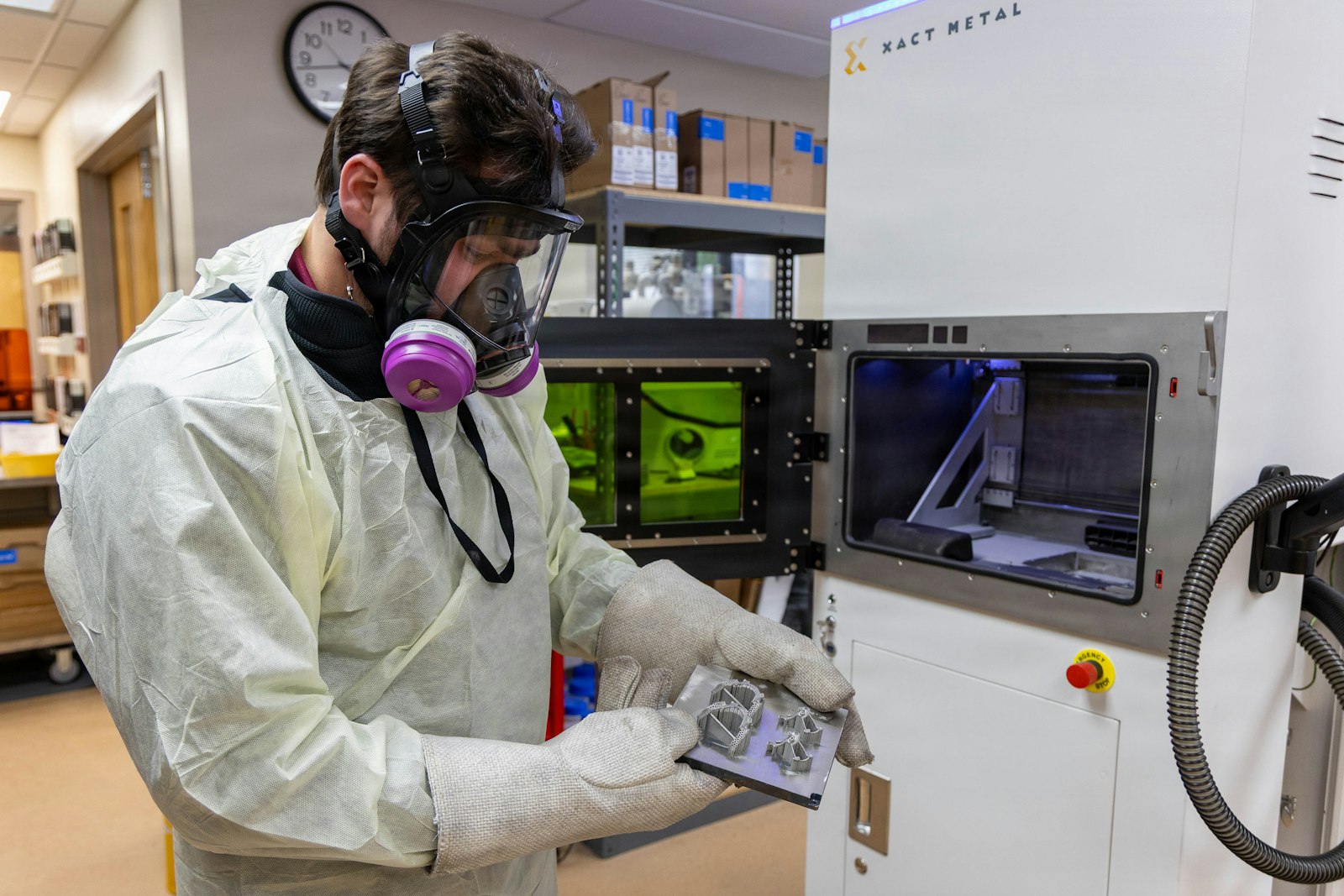
A high-power laser fuses fine nylon (PA12, PA11, PA-GF) powder layer by layer. Unfused powder around the part acts as a support — no separate support structures needed. After cooling, parts are extracted from the powder cake, sandblasted to remove residue, and optionally dyed or smoothed. Excellent isotropic strength, slightly grainy surface.
MJF — Multi Jet Fusion
HP’s process. Inkjet heads selectively deposit a fusing agent and a detailing agent onto each new layer of nylon powder, then infrared lamps fuse the marked areas. No laser scanning means an entire layer fuses at once — much faster than SLS for large build volumes. Parts are dense, mechanically similar to SLS, with a smoother finish (Ra 6 µm vs SLS Ra 10 µm) and a characteristic dark-gray color.
Material comparison
| Process | Common materials | Color options |
|---|---|---|
| SLA | Standard resin, Tough resin, Flexible resin, Castable, Dental, Ceramic-filled, Clear | White / gray / black / clear / dyed (full spectrum after dye) |
| SLS | PA12, PA11, PA-GF (glass-filled), PA-CF (carbon-filled), TPU, PEBA | Natural white only as printed; dyed black/gray/colors post-process |
| MJF | PA12, PA11, PA12-GB (glass beads), PA-CF, TPU, PP | Native dark-gray / black; dyed colors available |
If you need transparent or full-color parts, SLA is the only viable option of the three. If you need long-term outdoor durability, MJF or SLS in dyed black is the right call (SLA resins yellow under UV).
Accuracy & minimum feature size
| Spec | SLA | SLS | MJF |
|---|---|---|---|
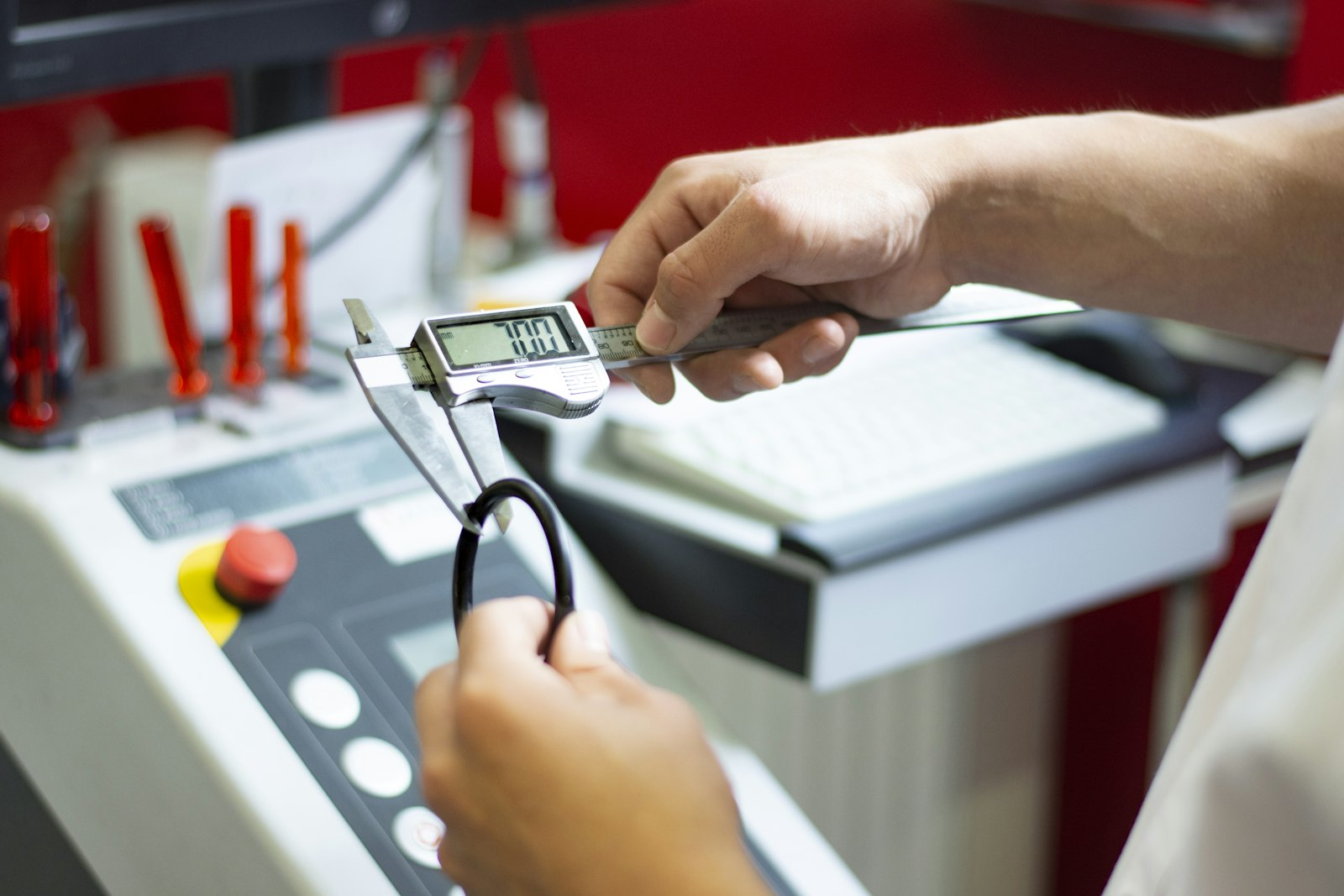
| Typical tolerance | ±0.05 mm or ±0.1% | ±0.3 mm or ±0.3% | ±0.3 mm or ±0.3% |
| Min feature (positive) | 0.2 mm | 0.5 mm | 0.5 mm |
| Min feature (negative — hole / slot) | 0.4 mm | 0.5 mm | 0.5 mm |
| Min wall thickness (supported) | 0.4 mm | 0.7 mm | 0.5 mm |
| Min wall thickness (unsupported) | 0.6 mm | 0.7 mm | 0.5 mm |
| Layer thickness (range) | 25–100 µm | 80–120 µm | 80 µm |
| Max build volume (typical) | 335 × 200 × 300 mm | 700 × 380 × 580 mm | 380 × 284 × 380 mm |
SLA wins decisively on dimensional accuracy and feature resolution — typical for parts that need press-fit assembly, fine living hinges, or visible textures and engravings. SLS and MJF have similar specs but SLS gets a slight edge on very large parts due to bigger build volumes; MJF is more consistent on smaller parts due to the simultaneous-layer fusion process.
Mechanical strength
| Property (PA12 / equivalent) | SLA Tough resin | SLS PA12 | MJF PA12 |
|---|---|---|---|
| Tensile strength (MPa) | 33–55 | 48 | 48 |
| Elongation at break (%) | 14–24 | 20 | 20 |
| Tensile modulus (MPa) | 1,400–2,700 | 1,650 | 1,800 |
| Heat deflection (°C) | 45–88 | 171 | 175 |
| Isotropy (X–Y vs Z) | Anisotropic ~70% Z | Near-isotropic 95% Z | Near-isotropic 95% Z |
| Impact resistance | Low (brittle) | High | High |
SLA’s tough resins look comparable on the spec sheet, but they age — a 6-month-old SLA part loses 20–30% of its strength versus day-1 measurements due to continued photopolymer reaction and UV exposure. SLS and MJF nylon parts are stable indefinitely. For functional parts that snap-fit, take repeated load, or live outdoors, SLS / MJF are the only viable picks.
Surface finish
- SLA: Glassy, almost injection-mold-like surface on cured surfaces (Ra 1.6 µm). Layer lines visible at glancing angles. Support marks need sanding. Easily polished to mirror finish. Best baseline cosmetic appearance.
- SLS: Matte, slightly grainy, Ra ~10 µm. Powder texture is visible up close. Often vapor-smoothed or dyed black to mask the texture. Cannot be polished smooth without significant material removal.
- MJF: Slightly smoother than SLS (Ra ~6 µm). Native dark-gray color hides layer lines well. The go-to choice when you want functional plastic parts with a presentable finish without extra post-processing.

Cost crossover by volume
Cost depends heavily on part size and packing density (how many parts fit in a single build). Here’s a typical comparison for a hand-sized part (~50 × 50 × 50 mm) in nylon-grade material at our shop:
| Quantity | SLA Tough | SLS PA12 | MJF PA12 |
|---|---|---|---|
| 1 piece | $45 | $80 | $95 |
| 10 pieces | $380 | $420 | $420 |
| 50 pieces | $1,650 | $1,400 | $1,200 |
| 200 pieces | $5,900 | $4,200 | $3,200 |
| 500 pieces | $13,500 | $8,500 | $6,500 |
For 1-piece prototypes, SLA is dramatically cheaper because the build setup overhead is small and the part doesn’t need a full powder bed. Above ~30 parts, MJF starts winning because the entire build platform fuses at once — adding more parts barely adds time. Above ~100 parts, MJF is the clear cost leader on PA12-grade nylon work.
Five part types and the right process
1. Visual design prototype (handle, housing concept)
Pick SLA. Best surface finish out of the bag, sharp edges, fine details. The customer wants to see what the production part will look like — SLA + post-paint gets you closest. Cost is also lowest in 1–10 piece quantities.
2. Functional snap-fit assembly with living hinge
Pick SLS or MJF. SLA’s brittleness will fracture the snap-fit on second use; SLS / MJF nylon flexes thousands of times. MJF wins on cost above 30 pcs.
3. Drone propeller guard or end-use bracket
Pick MJF (PA12-GB or PA-CF). Glass-bead or carbon-fiber-reinforced nylon delivers strength close to injection-molded ABS+GF. Dark-gray native color is durable outdoors. Production-grade isotropic mechanical properties.
4. Custom medical surgical guide (single-use, sterile)
Pick SLA biocompatible resin. ISO 10993 / USP Class VI approved resins available, autoclavable, fine feature resolution for patient anatomy. SLS PA12-MG (medical grade) is also viable but has a longer regulatory paper trail.
5. Low-volume production run (200 pcs of an enclosure)
Pick MJF. Best cost-per-part above 100, smoother finish than SLS, dimensionally consistent across the build. An attractive bridge-production option before committing to injection molding tooling.
Decision flowchart in plain English
- Need transparent / clear? → SLA only.
- Need brittle is OK + best looking + 1-10 pcs? → SLA.
- Need functional / strong / outdoor + ≤10 pcs? → SLS.
- Need functional / strong + 30+ pcs? → MJF.
- Need 500+ pcs? → Compare MJF vs short-run injection molding cost; we can quote both.
- Need < 0.4 mm features? → SLA only.
Common pitfalls
- Ordering SLA for outdoor parts — 6 months of UV will yellow and embrittle the resin. Use MJF dyed black, or paint the SLA part with UV-protective coating.
- Ordering SLS in white when you wanted bright color — SLS prints natural white only; dyeing brightens but never matches injection-molded color saturation. For vibrant color, paint the SLS part or switch to SLA + dye.
- Ordering MJF for fine details (< 0.5 mm) — features will fuse partially or close up. Move to SLA, or add a 0.5 mm minimum feature DFM rule.
- Treating “PA12” as one material — SLS PA12 and MJF PA12 print the same material name but have subtly different mechanical properties (MJF tends ~5% stiffer, SLS slightly more elastic).
- Forgetting post-processing cost — vapor smoothing, dyeing, painting can add 20-50% to base print price. Always ask for total delivered cost.
FAQ
Is MJF always better than SLS for production?
For PA12-grade nylon, MJF wins on cost and surface finish above ~30 pcs. But SLS still wins for very large parts (above ~400 mm in any dimension where MJF doesn’t have build volume), some specialty materials (PA11 for impact resistance, TPU 88A for flex), and applications where the lighter native color of SLS is preferable to the dark-gray native of MJF.
Can SLA parts be used as production parts?
For low-volume specialty applications — dental aligners, hearing aid shells, jewelry casting patterns — yes, SLA is the production process. For most other applications it’s a prototype-only process because of brittleness, UV sensitivity, and elevated cost above 10-20 parts. Engineering-grade resins (Tough 1500, Tough 2000) are closing the gap but still aren’t production-grade for snap-fits or load-bearing parts.
What about FDM? Why is it not in this comparison?
FDM (filament extrusion) is a different category — visible layer lines, anisotropic strength (Z direction is 30-50% weaker), much wider tolerance band. It’s the right call for very large parts where SLS / MJF build volume is insufficient, or for materials SLS / MJF don’t offer (PETG, PEEK in some cases). For typical hand-sized industrial parts, SLA / SLS / MJF are dominant.
Does MJF need post-processing?
Less than SLS — the smoother native finish often goes straight to ship. If you want a deeper black or a colored finish, dyeing adds ~$1-3 per part. For outdoor parts, a single coat of UV-stable clear adds longevity. Vapor smoothing (PostPro process) is available for parts that need a fully sealed, polished surface.
Which process should I pick if I’m not sure?
Send us your STEP file and a one-line description of how the part will be used. Our process engineers run the trade-off the same way we just walked through — geometry, mechanical loading, expected lifetime, finish, quantity, deadline. The DFM review is part of the standard 3D printing quoting process and adds zero cost to your RFQ.
Send your STL — get the right process recommendation
Free DFM review with every 3D printing quote. Engineer-to-engineer reply within 24 hours.
Leave a Reply